PECUNIA GROUP INTERNATIONAL

PECUNIA GROUP INTERNATIONAL
We grow businesses. Lets do it all for you and walk the walk with you . Your business is worth it. Call us today 08030725159; 08165758496; 012959940

Sunday, 2 November 2014

home of slaves revisited in america

Montpelier estate in Virginia. Madison’s Montpelier estate in Virginia is planning a major refurbishment and a rebuilding of its slave quarters with a $10 million pledge from a leading Washington philanthropist and history buff. On Saturday, Nov. 1, 2014 businessman David Rubenstein will announce the gift to restore the home where Madison drafted ideas that became the US Constitution and Bill of Rights before he became the nation’s fourth president. (AP Photo/Kenneth M. Wyner, Montpelier Foundation)
WASHINGTON (AP) — Homes of slaves who served President James Madison at his Montpelier estate in Virginia will be rebuilt for the first time over the next five years, along with other refurbishments to the home of one of the nation's Founding Fathers, thanks to a $10 million gift announced Saturday.
David Rubenstein, a leading Washington philanthropist and history buff, pledged the $3.5 million needed to rebuild the slave quarters next to the mansion in the foothills of the Blue Ridge Mountains. Another $6.5 million will be devoted to refurnishing parts of the home where Madison drafted ideas that would become the U.S. Constitution and the Bill of Rights.
After widow Dolley Madison sold the estate in 1844, many family belongings were dispersed or sold, leaving some rooms mostly empty of period furnishings after the estate opened to visitors in 1987. Now, curators hope to recover or borrow artifacts from the fourth president's family life to bring the estate back to life, said Montpelier Foundation President and CEO Kat Imhoff.
Rubenstein told The Associated Press he wanted to help make the estate more authentic. Montpelier could draw more visitors to learn about history, he said, if the house is fully restored and its slave quarters built out. It currently draws about 125,000 visitors a year. Last year, Rubenstein gave funds to recreate slave quarters on Thomas Jefferson's plantation.
"It's this dichotomy. You have people who were extraordinarily intelligent, well-informed, educated; they created this incredible country — Jefferson, Washington, Madison — yet they lived with this system of slavery. Jefferson, Washington and Madison all abhorred slavery, but they didn't do, they couldn't do much about it," he said. "We shouldn't deify our Founding Fathers without recognizing that they did participate in a system that had its terrible flaws."
The donation marks a trifecta of gifts totaling $30 million to projects at Virginia's oldest presidential sites. Last year Rubenstein gave $10 million gifts to both Jefferson's Monticello estate and George Washington's home at Mount Vernon.
Recreating Montpelier's South Yard, where domestic slaves lived, as well as the basement areas of the mansion where they worked, will help tell a fuller version of history, Imhoff said.
"For folks that have been coming to any of these presidential sites, the fact that we're bringing this complete American story back into the landscape I think is very important," she said. "It is challenging, but I also think it's that wonderful tension that we as Americans are embracing, that this is our history, that making the invisible visible is very important to us as a nation, and it will make a stronger American story."
The slave quarters at Montpelier were cleared away 165 years ago and planted over with grass, but the site has not been disturbed since. Archaeologists plan to excavate the South Yard in public view to recover remnants of slave life to help illustrate new stories.
One of the slaves who lived in a cramped dwelling was Paul Jennings. He was born at Montpelier in 1799, and at the age of 10 moved with the Madisons to serve in the White House. He later wrote a book about his experience, which is considered the first White House memoir. Jennings recalled helping Dolley Madison save curtains, silver, documents and a famous portrait of George Washington when the British burned the White House in 1814.
Jennings returned to Montpelier as Madison's personal manservant. After Madison's death, Jennings purchased his freedom and moved to Washington.
Matt Reeves, Montpelier's director of archaeology, said his team can recreate the slave quarters close to their original construction through research from documents and excavations.
"By bringing the slave quarters back, what we're able to do is tell the stories of the slave families that lived here and tell their more personal stories that allow visitors to imagine the enslaved community not as just workers, but as people, as mothers, fathers, aunts and uncles," Reeves said.
Visitors now get an authentic experience at the front of the mansion and see the home inside as it was when Madison lived there, after a major $25 million architectural restoration completed in 2008, Reeves said. But as visitors leave the back porch, they see a 20th-century landscape of grass and trees, void of any evidence of the plantation where more than 100 slaves lived.
"It's really going to bring this larger community back to life," Reeves said. "It will really help define Mr. Madison as who he was — as a Virginia planter, as a slave owner.

American man killed in dominican republic

SANTO DOMINGO, Dominican Republic (AP) — A 55-year-old American was found strangled in his apartment in the Dominican Republic's capital, authorities said Saturday.
Police identified the victim as Van Teasley and said his body was discovered early Friday. He had been bound and gagged.
Officials said police were alerted by a friend of the victim, Jeffrey Gordon Stroud, who was concerned that Teasley was not answering his door bell or responding to phone calls. The door to the victim's apartment was unlocked when police arrived to investigate, authorities said.
Another friend, Dana Fonville, said in a telephone interview from the United States that Teasley was a criminal defense attorney practicing in the U.S. capital. He said Teasley had bought the apartment in Santo Domingo to use for brief vacations and visited 10 to 12 times a year.
"I'm very angry. He was a generous individual and was very well liked. He had a very alive personality and was very upbeat," Fonville said.
He said Teasley arrived in the Dominican Republic on Thursday and was scheduled to return to the U.S. on Tuesday

man killed and eating dead in congo

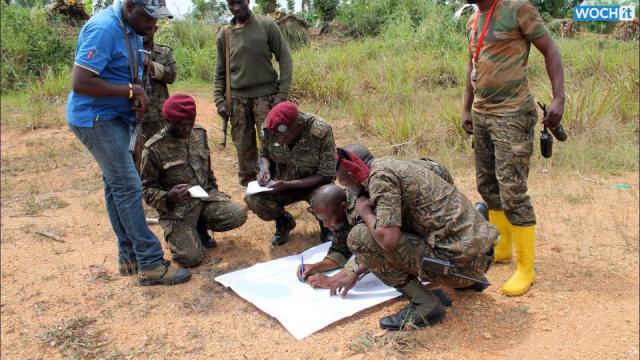
BENI Democratic Republic of Congo (Reuters) - A crowd stoned to death a young man in northeast Congo on Friday before burning and eating his corpse, witnesses said, in apparent revenge for a series of attacks by Ugandan rebels.
The incident in the town of Beni followed a number of overnight raids in the area blamed on the Islamist group ADF-NAUL, who are thought to have massacred more than 100 people this month, using hatchets and machetes to kill their victims.
Witnesses said the man, who has not been identified, aroused suspicion on a bus when passengers discovered he could not speak the local Swahili language and that he was carrying a machete.
Speaking from the town of Beni, Congo's President Joseph Kabila said the ADF-NALU militants would face the same fate as the rebel movement M23, which was defeated by a U.N.-backed government offensive last year.
"There is no question of negotiation with the terrorists," Kabila said in a speech at a local hotel. "They will be defeated as was the case with the M23. And it will be very soon."
ADF-NALU is an alliance of groups opposed to the Ugandan government that has operated from bases in neighboring Congo since the mid-2000s, undermining Kinshasa's grip on the area.
The movement was blamed for the deaths of 14 people, killed early on Thursday in the village of Kampi ya Chui, bringing the total death toll this month to at least 107, said Teddy Kataliko, president of the Civil Society of Beni.
Tensions ran high in the town on Friday morning with around 100 demonstrators blocking the road from the airport into town, throwing stones and waving machetes to demand greater government protection against the rebels.
Local government officials could not immediately be reached for comment. Earlier in the week, the government sought to downplay the threat posed by the group, which it had previously said was defeated in an operation earlier this year.
Estimates of its strength vary greatly, but the website of the U.N.'s peacekeeping mission in Congo estimates it has around 500 fighters.
The Ugandan government has said ADF-NALU is allied with Somalia's al Qaeda-linked al Shabaab movement, but analysts say the nature of these ties is not clear, despite the ADF-NALU's clear Islamist ideology.
In his speech on Friday, Kabila appealed for public support for a ramping up of its offensive against the group, but did not specify what that would entail.
"I call on the population to support the army because the victory against the M23 was because the population was behind the army," he said. "I call on young people to join the army in great numbers."
Kabila also defended the U.N. peacekeeping mission known as MONUSCO following criticism from locals that it had failed to defend them and had even collaborated with ADF-NALU.
Crowds of mainly young men attacked several peacekeeping facilities with stones and bows and arrows last week, forcing the evacuation of some staff.
The U.N. mission says it has stepped up patrols in the area in the wake of the massacres.
(Reporting by Aaron Ross; Editing by Emma Farge and Crispian Balmer)

mexican police kill americans

Authorities were investigating on Friday a possible police connection to the killing of three U.S. citizens visiting their father in Mexico who were found shot to death along with a Mexican friend more than two weeks after going missing.
Parents of the three siblings, whose bodies were identified Thursday, have said witnesses reported they were seized by men dressed in police gear calling themselves "Hercules," a tactical security unit in the violent border city of Matamoros wracked by cartel infighting. Nine of the unit's 40 officers are being questioned, Tamaulipas state Attorney General Ismael Quintanilla Acosta said.
It would be the third recent case of alleged abuse and killings by Mexican security forces.
The country is already convulsed by the case of 43 students from a teachers college in the southern state of Guerrero, their disappearance blamed on a mayor and police working with a drug cartel. Fifty-six people are under arrest, including dozens of police officers.
In a separate case in June, soldiers killed 22 suspected gang members in Mexico state, then altered the scene and intimidated witnesses to hide the fact that most of the dead were executed after they surrendered, a National Commission on Human Rights report said last week. Three soldiers face murder charges.
"We will apply the full force of the law and zero tolerance," Tamaulipas Gov. Egidio Torre Cantu said of the latest case, lamenting the death of the three Americans and a Mexican citizen, even though their identities had yet to be confirmed by DNA.
Presidential spokesman Eduardo Sanchez declined to comment when asked about the newest case.
"We have been in touch with Mexican officials ... and will take appropriate action once more is known on the circumstances," the U.S. Embassy said Friday in a statement.
The father of the three Americans, Pedro Alvarado, identified his children from photographs of the bodies showing tattoos, Quintanilla told Radio Formula. Clothing found with the bodies also matched that of Erica Alvarado Rivera, 26, and her brothers, Alex, 22, and Jose Angel, 21, who disappeared Oct. 13 along with Jose Guadalupe Castaneda Benitez, Erica Alvarado's 32-year-old boyfriend.
Each was shot in the head and the bodies were burned, most likely from lying in the hot sun for so long, Quintanilla said.
Tamaulipas authorities said it could take 24 to 48 hours for DNA tests to further confirm that the bodies were those of the Alvarado siblings, who were last seen in El Control, a small town near the Texas border west of Matamoros, about to return home to Progreso, Texas.
"They were good kids," said an aunt, Nohemi Gonzalez. "I don't know why they did that to them."
The three siblings shared their mother's modest brick home on a quiet street in Progreso less than three miles from the border. Erica, who has four children between the ages of 3 and 9, had been scheduled to begin studying next month to become a nursing assistant.
Brothers Jose Angel and Alex had been set to make their annual pilgrimage to Missouri as migrant farm workers more than a week ago, Gonzalez said. When they weren't on the road, they divided their time between their mother's house in Texas and their father's in Mexico.
On Sunday, Oct. 12, Erica drove her black Jeep Cherokee across the border to El Control. She dropped it at her father's house and went to visit with her boyfriend.
Her mother, Raquel Alvarado, had told her to be back in Progreso by early Monday morning, because Raquel had to work and Erica's kids had to get to school. Raquel put the kids to bed Sunday night and awoke at 4 a.m. to see Erica was not home. She began calling her daughter's cellphone and continued through the morning. "I'm always worried about her when she goes over there," the mother said.
Around 1 p.m., she reached her former husband. He told her Erica had called her brothers and asked them to bring her Jeep to a roadside restaurant under a bridge near El Control where she was eating with her boyfriend. One brother drove her Jeep and the other drove his Chevrolet Tahoe because they all planned to return to Progreso from there.
According to Raquel Alvarado, witnesses told family members that the brothers arrived around 12:30 p.m. and saw members of the police unit called Hercules pushing their sister and Castaneda and hitting Erica. When the brothers intervened, the police took all four of them, along with their vehicles. The witnesses said the armed men identified themselves as members of the Hercules unit and warned against intervening.
The Alvarados say they later found their children's cars at an import car lot belonging to Luis Alfredo Biasi, Matamoros' director of social services. Quintanilla could not confirm that. Biasi did not immediately respond to a request for comment from The Associated Press.
Mayor Leticia Salazar officially introduced Hercules in September as a group with particular skills to confront crime in high-risk operations, according to a press release.
City Clerk Joe Mariano Vega, who was identified in the release as the group's commander, said in an interview earlier this year that Hercules was comprised of former marines and soldiers who policed hot zones for crime in the city's neighborhoods.
Neither Salazar nor the city's spokeswoman returned messages seeking comment.
Quintanilla said he saw no reason so far to interview Salazar or Biasi in the Alvarado case.

A Kentucky man was charged Friday with killing his parents,

 A Kentucky man was charged Friday with killing his parents, his sister and an acquaintance nearly a week after the four were found shot to death in southwestern Kentucky.
Ryan Champion, 36, was arrested and charged with four counts of capital murder and one count of capital kidnapping, Kentucky State Police Sgt. Dean Patterson said. The suspect was being held in the Christian County Detention Center.
The victims included the suspect's parents, Lindsey Champion, 62, and Joy Champion, 60; and his 31-year-old sister, Emily Champion. They were found dead along with 22-year-old Vito Riservato, identified as an acquaintance of Ryan Champion.
Patterson declined to discuss a possible motive and provided few details about the slayings.
"We collected a tremendous amount of evidence from the crime scene," he said. "As things started to come together, we finally developed enough probable cause to make the charge today."
The victims were found "in and around" the parents' home in Cadiz, state police said.
Autopsies showed all four died of gunshot wounds.
After the shootings last Sunday, Ryan Champion went to a relative's house across the street and asked a family member to contact authorities, Patterson said. He said the relative did not want to be identified.
Immediately after the shootings and before he was a suspect, Ryan Champion was taken to a hospital for symptoms of shock, Patterson said. He did not leave the area after his release from the hospital, but Patterson declined to say whether police had interviewed him.
"He's been out and about," Patterson said. "We've been kind of keeping tabs on him."
Ryan Champion was a contractor by trade and his most recent residence was in Oak Grove, Kentucky, Patterson said.
State police had initially said one of the victims was suspected of the shooting.
Patterson offered no details Friday about how Ryan Champion and Riservato knew one another or for how long. Investigators now believe that the other victims didn't know Riservato, Patterson said.
"If there was any acquaintance, it wasn't much of one at all — if at all," Patterson said.
Emily Champion was in Cadiz for a short visit at the time of the slayings, and the capital kidnapping charge against Ryan Champion pertains to her, Patterson said. He declined to elaborate.
Emily Champion was a veterinarian at Baronne Veterinary Clinic of Sunset, Louisiana. She graduated from Auburn University's college of veterinary medicine in 2008 and had worked at the clinic since 2009, according to her biography on the clinic's website.
Joy Champion was a retired teacher who taught for 30 years at schools in Trigg County.
Cadiz is located about 40 miles northwest of Clarksville, Tennessee

American fugitive captured

Scott Malkowski, a task force commander with the U.S. Marshals Service, spied a figure moving from the woods toward an abandoned airplane hangar in the Pocono Mountains. Looking at his face, his black hat and fleece, and his height and weight, Malkowski was certain he had his man.

Eric Frein didn't stand a chance.
"Suspect," he told the two operators by his side, and they fanned out on either side of their quarry, who had no idea he'd just been spotted. Hidden by tall grass, Malkowski moved stealthily toward his target, adrenaline coursing through his body.
The Marshals Service was one of several state and federal law enforcement agencies that took part in the intensive manhunt for Frein — the survivalist and marksman charged in a deadly sniper attack outside the Blooming Grove state police barracks — and wound up nabbing him on the 48th day of the search.
Frein had an initial court appearance Friday morning and remained jailed without bail on first-degree murder and other charges in the Sept. 12 ambush that killed Cpl. Bryon Dickson and critically wounded Trooper Alex Douglass.
He did not have a lawyer and was not asked to enter a plea. A preliminary hearing was set for Nov. 12.
The district attorney plans to seek the death penalty.
Until his capture around 6 p.m. Thursday, Frein had some residents beginning to wonder if law enforcement was up to the task, given the rugged terrain of the Poconos and the evident skill with which he eluded dogs, thermal-imaging cameras and teams of heavily armed officers.
Scott Kimball, though, never had a doubt.
"We expected to find him," said Kimball, 48, a Virginia-based member of the U.S. Marshals' special operations group.
On Thursday, Kimball was stationed in a command post while Malkowski, 44, and other members of the team — acting on a request from Pennsylvania State Police — worked to clear an abandoned resort. About two hours in, Malkowski and two others approached the hangar at the old Birchwood-Pocono Airpark.
"We just had a hunch that if we were on the run, this is a place we would hide," he said.
Once Frein was spotted, Malkowski and his team sneaked up on the fugitive. They were about 25 yards away when Frein finally realized he wasn't alone. Malkowski identified himself as law enforcement and ordered Frein, who was unarmed but had weapons in the hangar, to get on the ground.
"What's your name?" Malkowski asked.
Frein told him.
He made no attempt to flee and didn't put up a fight.
"He had nowhere to go. There is nothing he could've done," Malkowski said, adding: "From what I saw, he felt defeated because we'd won. We'd defeated him."
After the marshals turned him over to state police, Frein was placed in Dickson's handcuffs and driven in Dickson's squad car to the Blooming Grove barracks.
Frein, 31, could be seen with a gash on the bridge of his nose and a scrape over his left eye. Malkowski and Kimball said he suffered the injuries while marshals had him down on the pavement.
Malkowski said his first thoughts upon Frein's capture were "relief for the community, for Pennsylvania State Police, and closure for Cpl. Dickson's family that he's finally in custody."
Authorities said they were trying to reconstruct Frein's time on the run. They believe he broke into cabins and other places for food and shelter, and he evidently found time to shave — he had a neatly trimmed goatee when he was caught.
State police Lt. Col George Bivens put the cost of the manhunt at about $10 million.
Troopers questioned Frein, but authorities would not disclose what he told them or discuss a possible motive. Authorities have said Frein had expressed anti-law enforcement views online and to people who knew him.
With the manhunt over, tactical experts like Malkowski and Kimball were getting ready to leave the northeastern Pennsylvania woods behind.
Kimball's next mission? "Go home to see my kids."