PECUNIA GROUP INTERNATIONAL

PECUNIA GROUP INTERNATIONAL
We grow businesses. Lets do it all for you and walk the walk with you . Your business is worth it. Call us today 08030725159; 08165758496; 012959940

Sunday, 2 November 2014

human skulls used as hallowen masks in america


By Richard Weizel
MILFORD Conn. (Reuters) - A pair of Connecticut junk haulers was stunned to learn on Friday that two skulls picked up at the cluttered home of a deceased man on the day before Halloween were human remains, not made of plastic as they had thought.
The skulls were among thousands of occult-related items that David Odice and Charlie Inzucchi of The Junkluggers Junk Removal Co cleared out of the Fairfield home where Robert L. DeVitto lived until his death two weeks ago at age 56.
“Being Halloween makes this real creepy and spooky, especially considering what else we found in the house,” Odice, 43, said on Friday. "There were thousands of things related to the occult: magazines, videos, crystals, amulets, all kinds of new age and metaphysical stuff."
After finishing the job on Thursday the contractors dumped the skulls, and the rest of the dead man's paranormal and satanic-themed belongings, at a Stamford recycling center.
After noticing the skulls appeared human, an attendant at the center notified police. Images of the skulls were sent to the state Medical Examiner's Office, which later determined the skulls, one male and one female, to be human.
Stamford Police Lieutenant Diedrich Hohn said on Friday the department will know in two weeks the ages of the skulls and whether a criminal investigation is required.
“It's one of the most bizarre cases we've had, especially being Halloween,” Hohn said. “If the skulls turn out to be 120 years old, obviously we don't have a big crime here. But we want to be sure the skulls were not part of a grave robbery.”
Hohn said police tracked down the owner's father, Robert J. DeVitto, 89, also of Fairfield, who told them his son had recently died. DeVitto could not be reached for comment on Friday.
(Reporting by Richard Weizel; Writing by Frank McGurty; Editing by Eric Beech)

home of slaves revisited in america

Montpelier estate in Virginia. Madison’s Montpelier estate in Virginia is planning a major refurbishment and a rebuilding of its slave quarters with a $10 million pledge from a leading Washington philanthropist and history buff. On Saturday, Nov. 1, 2014 businessman David Rubenstein will announce the gift to restore the home where Madison drafted ideas that became the US Constitution and Bill of Rights before he became the nation’s fourth president. (AP Photo/Kenneth M. Wyner, Montpelier Foundation)
WASHINGTON (AP) — Homes of slaves who served President James Madison at his Montpelier estate in Virginia will be rebuilt for the first time over the next five years, along with other refurbishments to the home of one of the nation's Founding Fathers, thanks to a $10 million gift announced Saturday.
David Rubenstein, a leading Washington philanthropist and history buff, pledged the $3.5 million needed to rebuild the slave quarters next to the mansion in the foothills of the Blue Ridge Mountains. Another $6.5 million will be devoted to refurnishing parts of the home where Madison drafted ideas that would become the U.S. Constitution and the Bill of Rights.
After widow Dolley Madison sold the estate in 1844, many family belongings were dispersed or sold, leaving some rooms mostly empty of period furnishings after the estate opened to visitors in 1987. Now, curators hope to recover or borrow artifacts from the fourth president's family life to bring the estate back to life, said Montpelier Foundation President and CEO Kat Imhoff.
Rubenstein told The Associated Press he wanted to help make the estate more authentic. Montpelier could draw more visitors to learn about history, he said, if the house is fully restored and its slave quarters built out. It currently draws about 125,000 visitors a year. Last year, Rubenstein gave funds to recreate slave quarters on Thomas Jefferson's plantation.
"It's this dichotomy. You have people who were extraordinarily intelligent, well-informed, educated; they created this incredible country — Jefferson, Washington, Madison — yet they lived with this system of slavery. Jefferson, Washington and Madison all abhorred slavery, but they didn't do, they couldn't do much about it," he said. "We shouldn't deify our Founding Fathers without recognizing that they did participate in a system that had its terrible flaws."
The donation marks a trifecta of gifts totaling $30 million to projects at Virginia's oldest presidential sites. Last year Rubenstein gave $10 million gifts to both Jefferson's Monticello estate and George Washington's home at Mount Vernon.
Recreating Montpelier's South Yard, where domestic slaves lived, as well as the basement areas of the mansion where they worked, will help tell a fuller version of history, Imhoff said.
"For folks that have been coming to any of these presidential sites, the fact that we're bringing this complete American story back into the landscape I think is very important," she said. "It is challenging, but I also think it's that wonderful tension that we as Americans are embracing, that this is our history, that making the invisible visible is very important to us as a nation, and it will make a stronger American story."
The slave quarters at Montpelier were cleared away 165 years ago and planted over with grass, but the site has not been disturbed since. Archaeologists plan to excavate the South Yard in public view to recover remnants of slave life to help illustrate new stories.
One of the slaves who lived in a cramped dwelling was Paul Jennings. He was born at Montpelier in 1799, and at the age of 10 moved with the Madisons to serve in the White House. He later wrote a book about his experience, which is considered the first White House memoir. Jennings recalled helping Dolley Madison save curtains, silver, documents and a famous portrait of George Washington when the British burned the White House in 1814.
Jennings returned to Montpelier as Madison's personal manservant. After Madison's death, Jennings purchased his freedom and moved to Washington.
Matt Reeves, Montpelier's director of archaeology, said his team can recreate the slave quarters close to their original construction through research from documents and excavations.
"By bringing the slave quarters back, what we're able to do is tell the stories of the slave families that lived here and tell their more personal stories that allow visitors to imagine the enslaved community not as just workers, but as people, as mothers, fathers, aunts and uncles," Reeves said.
Visitors now get an authentic experience at the front of the mansion and see the home inside as it was when Madison lived there, after a major $25 million architectural restoration completed in 2008, Reeves said. But as visitors leave the back porch, they see a 20th-century landscape of grass and trees, void of any evidence of the plantation where more than 100 slaves lived.
"It's really going to bring this larger community back to life," Reeves said. "It will really help define Mr. Madison as who he was — as a Virginia planter, as a slave owner.

American man killed in dominican republic

SANTO DOMINGO, Dominican Republic (AP) — A 55-year-old American was found strangled in his apartment in the Dominican Republic's capital, authorities said Saturday.
Police identified the victim as Van Teasley and said his body was discovered early Friday. He had been bound and gagged.
Officials said police were alerted by a friend of the victim, Jeffrey Gordon Stroud, who was concerned that Teasley was not answering his door bell or responding to phone calls. The door to the victim's apartment was unlocked when police arrived to investigate, authorities said.
Another friend, Dana Fonville, said in a telephone interview from the United States that Teasley was a criminal defense attorney practicing in the U.S. capital. He said Teasley had bought the apartment in Santo Domingo to use for brief vacations and visited 10 to 12 times a year.
"I'm very angry. He was a generous individual and was very well liked. He had a very alive personality and was very upbeat," Fonville said.
He said Teasley arrived in the Dominican Republic on Thursday and was scheduled to return to the U.S. on Tuesday

man killed and eating dead in congo

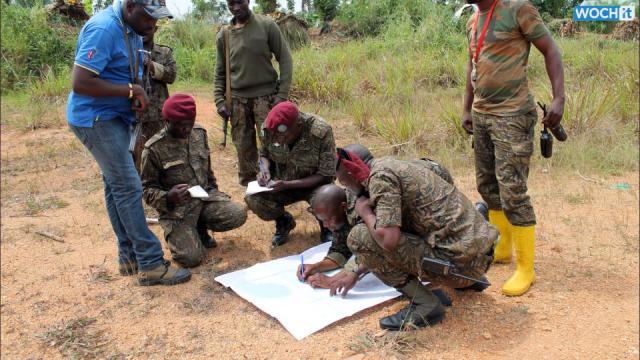
BENI Democratic Republic of Congo (Reuters) - A crowd stoned to death a young man in northeast Congo on Friday before burning and eating his corpse, witnesses said, in apparent revenge for a series of attacks by Ugandan rebels.
The incident in the town of Beni followed a number of overnight raids in the area blamed on the Islamist group ADF-NAUL, who are thought to have massacred more than 100 people this month, using hatchets and machetes to kill their victims.
Witnesses said the man, who has not been identified, aroused suspicion on a bus when passengers discovered he could not speak the local Swahili language and that he was carrying a machete.
Speaking from the town of Beni, Congo's President Joseph Kabila said the ADF-NALU militants would face the same fate as the rebel movement M23, which was defeated by a U.N.-backed government offensive last year.
"There is no question of negotiation with the terrorists," Kabila said in a speech at a local hotel. "They will be defeated as was the case with the M23. And it will be very soon."
ADF-NALU is an alliance of groups opposed to the Ugandan government that has operated from bases in neighboring Congo since the mid-2000s, undermining Kinshasa's grip on the area.
The movement was blamed for the deaths of 14 people, killed early on Thursday in the village of Kampi ya Chui, bringing the total death toll this month to at least 107, said Teddy Kataliko, president of the Civil Society of Beni.
Tensions ran high in the town on Friday morning with around 100 demonstrators blocking the road from the airport into town, throwing stones and waving machetes to demand greater government protection against the rebels.
Local government officials could not immediately be reached for comment. Earlier in the week, the government sought to downplay the threat posed by the group, which it had previously said was defeated in an operation earlier this year.
Estimates of its strength vary greatly, but the website of the U.N.'s peacekeeping mission in Congo estimates it has around 500 fighters.
The Ugandan government has said ADF-NALU is allied with Somalia's al Qaeda-linked al Shabaab movement, but analysts say the nature of these ties is not clear, despite the ADF-NALU's clear Islamist ideology.
In his speech on Friday, Kabila appealed for public support for a ramping up of its offensive against the group, but did not specify what that would entail.
"I call on the population to support the army because the victory against the M23 was because the population was behind the army," he said. "I call on young people to join the army in great numbers."
Kabila also defended the U.N. peacekeeping mission known as MONUSCO following criticism from locals that it had failed to defend them and had even collaborated with ADF-NALU.
Crowds of mainly young men attacked several peacekeeping facilities with stones and bows and arrows last week, forcing the evacuation of some staff.
The U.N. mission says it has stepped up patrols in the area in the wake of the massacres.
(Reporting by Aaron Ross; Editing by Emma Farge and Crispian Balmer)